Welding Dreams in the Driveway: America's DIY Builders Are Taking Over the Kinetic Race
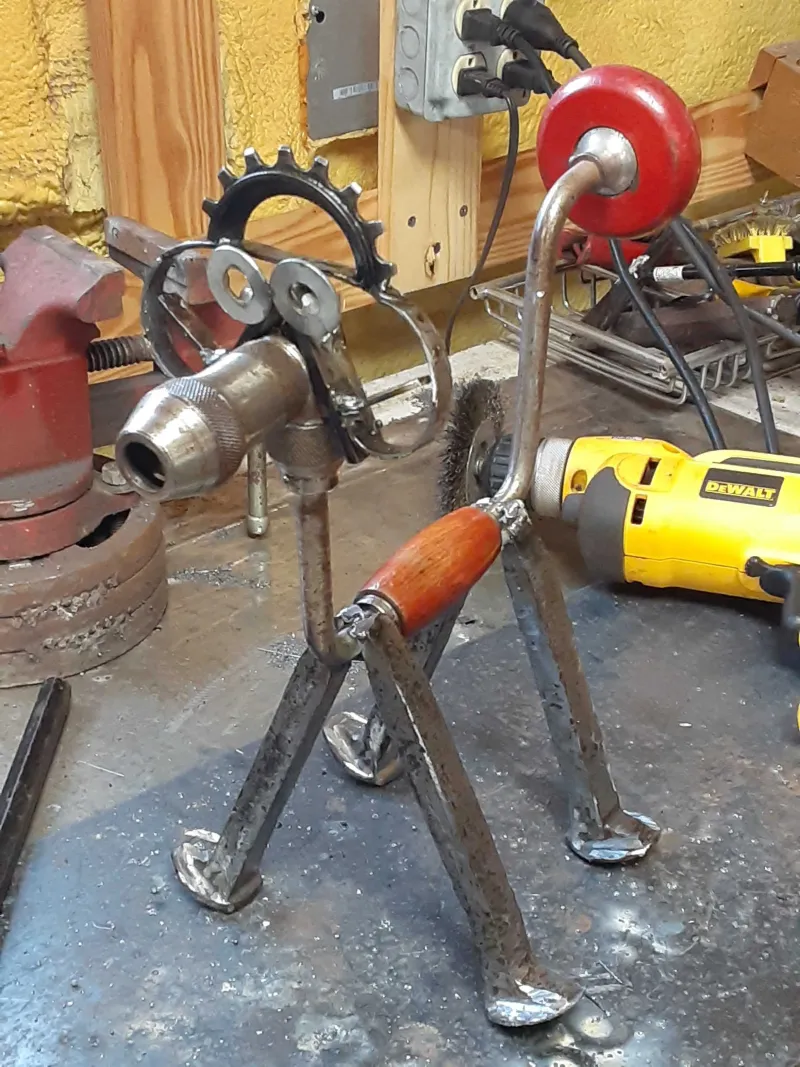
Photo: DIY maker garage workshop building metal sculpture, via i.pinimg.com
Somewhere in a suburb of Albuquerque, New Mexico, a retired school teacher and her two adult kids spent fourteen months turning a busted riding lawnmower, three bicycle frames, and roughly 400 feet of copper tubing into a twelve-foot-tall rolling octopus. Her name is Denise Morales, and she'd never welded anything before 2022.
"My daughter found the race online and called me laughing," Denise says, wiping grease from her hands on a shop rag she keeps tucked in her belt like a badge of honor. "By the end of the call we were already sketching ideas on a napkin. That was it. We were in."
The Morales family isn't an anomaly. Across the United States, a grassroots surge is reshaping the competitive landscape of the Kinetic Sculpture Race — that gloriously chaotic, multi-terrain endurance event where human-powered art machines battle sand dunes, open water, and muddy trails to cross a finish line in something approximating style. What was once a circuit dominated by veteran teams with established workshops and years of accumulated know-how is increasingly being infiltrated by first-timers armed with secondhand tools, online forums, and a healthy disregard for the conventional wisdom that says you need experience to compete.
The Lowered Bar of Entry (and Why That's a Beautiful Thing)
A decade ago, building a competition-ready kinetic sculpture meant either knowing someone deep in the craft community or having the resources to fake your way through expensive trial and error. Today, the calculus has changed dramatically.
Accessible fabrication technology deserves a lot of the credit. Affordable MIG welders from Harbor Freight, desktop CNC routers, and consumer-grade 3D printers have put serious fabrication power into the hands of anyone with a garage and a few hundred dollars to spend. Online platforms like YouTube, Instructables, and Reddit's r/engineering and r/DIY communities have essentially turned the internet into a free apprenticeship program. Want to learn how to waterproof a drivetrain? There's a three-part video series for that. Need to figure out how to distribute weight across a pontoon system? Someone in a Discord server has already done the math and posted their notes.
"We basically crowdsourced our education," says Marcus Webb, a 29-year-old software developer from Portland, Oregon, who built his first kinetic entry — a chrome-plated praying mantis with articulated forelegs — with a team of four friends over two winters. "Between forums, Reddit threads, and just cold-messaging builders whose old race photos I found on Facebook, we pieced together everything we needed to know. The community is incredibly generous."
Crowdfunding has also cracked open the financial barrier. Marcus's team raised just over $3,800 on Kickstarter by leaning into the absurdity of their project, offering backers handmade enamel pins and a promise to name one of the mantis's legs after top donors. They ended up with enough to cover materials, entry fees, and a custom paint job. "We didn't need a lot," he says. "We needed enough. That's a different thing."
Scrappy by Design
One of the more fascinating side effects of the DIY boom is the aesthetic it's producing. Without access to industrial fabrication shops or the budget for premium materials, garage builders are leaning into found objects, salvaged parts, and creative substitution in ways that are genuinely reshaping what kinetic sculpture looks like on the race course.
Denise Morales's octopus, for example, used PVC irrigation pipe wrapped in copper-colored mylar for its tentacles — a solution born entirely from budget constraints that ended up catching light in a way that purpose-built materials might never have. "We couldn't afford real copper," she laughs. "But honestly? It looked better."
This kind of constraint-driven creativity has a long and storied history in American making culture — from the backyard aerospace experiments of early rocketry hobbyists to the hot rod builders of 1950s California who turned junkyard castoffs into works of mechanical art. The Kinetic Sculpture Race, with its anything-goes spirit and emphasis on spectacle over perfection, is a natural home for that tradition.
"There's something really pure about teams who show up without any institutional backing," says longtime race volunteer coordinator Jamie Fitch, who has watched the competitor field evolve over more than a decade of involvement. "They're not trying to optimize. They're trying to express something. And sometimes that produces the most memorable machines on the course."
The Learning Curve Is Part of the Race
Of course, enthusiasm and ingenuity don't guarantee a smooth ride — literally or figuratively. First-time builders frequently underestimate the brutality of the terrain. The race's signature multi-surface format, which typically includes paved roads, open water crossings, sand dune navigation, and mud bogs, exposes structural weaknesses that a controlled test environment can never fully simulate.
Marcus Webb's mantis made it through the water crossing with flying colors but shed a rear wheel assembly during the sand dune segment. The team jury-rigged a fix with zip ties and a length of paracord they'd packed "just in case," and crossed the finish line anyway. "It wasn't pretty," he admits. "But we finished. And we already know exactly what we're changing for next time."
That iterative mindset — build, break, learn, rebuild — is practically the unofficial motto of the DIY builder cohort. Most of the first-timers we spoke with are already deep into planning their next entry, treating their debut race as an expensive and hilarious prototype test.
Denise Morales is no different. The octopus is currently disassembled in her garage, being retrofitted with a redesigned pontoon system and a new steering mechanism her son engineered after watching three hours of naval architecture videos online. "We're going to finish in the top half this time," she says with complete sincerity. "I've already told my students about it. I can't let them down."
Why the Establishment Should Be Paying Attention
Veteran teams would be wise not to sleep on this new generation of competitors. The DIY wave is bringing fresh engineering approaches, novel material choices, and an improvisational problem-solving style that doesn't always respect the conventional wisdom baked into years of race experience.
Some established teams are already taking notice — and reaching back. A handful of veteran builders have started hosting informal pre-race workshops at their shops, inviting newer teams in for a day of hands-on mentorship. It's the kind of community-building that feels very on-brand for a race that has always been as much about human connection as it has been about competition.
"The race gets better when more people are in it," says Jamie Fitch simply. "More ideas, more art, more chaos. That's the whole point."
Denise Morales puts it a little differently, in the way only a former teacher can: "Nobody belongs here more than anyone else. You just have to show up and try. That's true of most things worth doing."
Her octopus, mylar tentacles and all, would seem to agree.