Putting Down Roots at the Finish Line: The Kinetic Racers Who Never Left Town
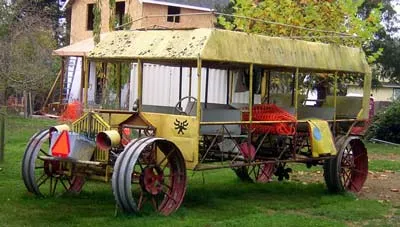
Every spring, kinetic sculpture racing season pulls competitors out of their garages and onto the streets, beaches, and mud flats of host cities across the country. Most teams pack up after the finish line, load their creations onto trailers, and head home until next year. But a quiet, unconventional migration has been happening on the margins of the sport — and it's reshaping what it means to be a serious competitor.
Some teams aren't going home anymore.
The Logic Behind the Leap
On the surface, relocating your entire operation to a race host city sounds like an extreme move. But spend ten minutes talking to the people who've done it, and the reasoning starts to make a strange kind of sense.
"We were driving fourteen hours each way, twice before race day just to scout terrain," says Marcus Delray, who co-captains a five-person team that relocated from rural Ohio to Humboldt County, California — home of the legendary Kinetic Grand Championship. "After three years of that, my co-builder just looked at me and said, 'What if we just... stayed?' And honestly, I didn't have a good argument against it."
The Kinetic Grand Championship, which winds through Arcata and Ferndale, covers over 40 miles of road, sand dunes, and open water. For teams serious about competitive placement, knowing that terrain intimately isn't a luxury — it's a tactical necessity. Living year-round in Humboldt gives relocated teams the ability to walk the course in winter, test floatation rigs in the same bay they'll race through in May, and build relationships with locals who've watched the event for decades.
"There's stuff you only learn by being here," Marcus says. "The way the tide runs at a certain point in the morning. Which sand stretches pack firm and which ones eat your wheels. You can't get that from a weekend visit."
What They Left Behind
The competitive advantages are real, but so are the costs. Relocating for a race isn't like moving for a corporate job transfer. There's no relocation package, no guaranteed income on the other end. Most teams fund their builds and their lives through freelance work, small businesses, or remote employment — and transplanting all of that to a new city is genuinely hard.
Tanya Ferris, a welder and sculptor who moved her workshop from suburban Denver to the Baltimore area to be close to the American Visionary Art Museum's kinetic events, describes the first year as "controlled chaos."
"I lost two clients who didn't want to deal with the time zone shift," she says. "My landlord back in Colorado thought I'd lost my mind. My mom definitely thought I'd lost my mind." She laughs. "But I found a local fabrication shop that lets me rent time on their equipment, and I've built more in the last eighteen months than I did in the three years before that."
For others, the personal sacrifices cut deeper. Long-distance relationships, distance from aging parents, kids changing schools — the social fabric of a life doesn't relocate as easily as a welding rig. Several builders who spoke with Kinetic Race Hub mentioned these pressures without dwelling on them, the way people do when they've made peace with a hard choice but haven't entirely forgotten the weight of it.
The Unexpected Payoff: Community
Here's what nobody warns you about when you move to a kinetic race town: the locals already know who you are before you unpack a single box.
Kinetic racing communities are small, tight-knit, and deeply invested in the people who show up year after year. When a team announces they're relocating permanently, the response from the local scene tends to be something between excitement and immediate practical assistance. Garage space materializes. Introductions get made. Somebody's cousin turns out to run a metal salvage yard.
"Within six weeks of moving here, I had a standing invitation to three different workshops," says Derek Okonkwo, who moved from Atlanta to the Ventura County area of California with his partner to be closer to the Southern California kinetic scene. "People just folded us in. It felt like joining a weird, wonderful extended family that builds giant rolling art and also has very strong opinions about propulsion systems."
This community integration often extends well beyond the racing world. Relocated builders frequently find themselves embedded in broader local arts scenes, maker communities, and small-business networks. Some have become fixtures at local schools, teaching welding and engineering concepts to kids who grow up watching the race. Others have opened studios that attract visitors curious about kinetic art year-round.
The line between "transplant racer" and "community member" tends to dissolve faster than most people expect.
Economic Ripples Nobody Planned
When a handful of highly skilled fabricators, artists, and engineers move into a mid-sized American city, the economic effects are modest but real. They rent spaces. They buy materials locally. They hire help during build season. They eat at restaurants and argue about coffee shops and complain about parking just like everyone else.
Some host cities have quietly begun to recognize this. A few arts-forward municipalities near major race venues have started making informal outreach to kinetic teams, floating the idea of subsidized studio space or artist residency arrangements in exchange for community programming. Nothing formalized yet — kinetic racing culture tends to resist anything that smells too much like institutional structure — but the conversations are happening.
"A city that hosts a major race has a built-in creative draw," says one local economic development staffer in a race host city who asked not to be named because the discussions are still preliminary. "If you can turn that into a year-round presence instead of a one-weekend event, that's genuinely interesting from a community development standpoint."
Does It Actually Help You Win?
Fair question. The honest answer is: probably yes, but it's complicated.
Teams that relocate near host cities do tend to show improved finishes over the years following their move, at least anecdotally. The terrain familiarity is real. The access to local knowledge is real. The ability to test equipment in actual race conditions throughout the year is genuinely valuable.
But kinetic racing isn't purely a performance sport. Judges score on artistry, costumes, and spirit as much as on speed and endurance. And some longtime competitors argue that the creative energy of building at home — surrounded by your own landscape, your own junk pile, your own weird inspirations — produces better, stranger, more original sculptures than optimizing for a specific course.
"I worry about the sport getting too tactical," admits one veteran racer who has competed for over fifteen years without ever considering a move. "Part of what makes kinetic racing beautiful is that everyone brings their own world to the starting line. If everyone's world becomes the same town, do we lose something?"
It's a genuine tension, and nobody has resolved it yet.
The Migration Continues
For now, the trickle of relocating teams shows no signs of stopping. If anything, the pandemic-era normalization of remote work made the financial logistics easier for a new wave of builders who'd been curious but hesitant.
Marcus Delray, back in Humboldt, is already helping a team from the Midwest figure out the practicalities of making a similar move. He sends them photos of the bay in February, when it's cold and gray and completely empty of race-day crowds.
"I tell them: this is what you're signing up for," he says. "Not the race. The whole rest of the year. The fog and the mud and knowing every pothole on the course route. And if that sounds good to you, then yeah — come on out. We'll find you a garage."
Somewhere between competitive strategy and genuine love for a place, that's where the kinetic migration lives.