Mothballed Masterpieces: The Secret Lives of Kinetic Sculptures Between Races
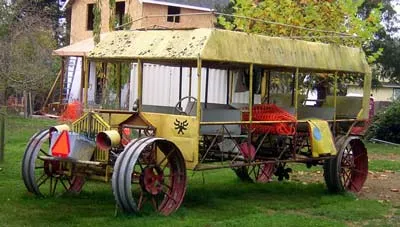
Photo: Ellin Beltz at English Wikipedia, CC BY-SA 3.0, via Wikimedia Commons
The race is over. The crowds have thinned, the judges have packed up their clipboards, and the last pedal stroke has been taken through the mud. But for the builders who poured months — sometimes years — of their lives into a kinetic sculpture, the work is far from done. Because now comes the question nobody talks about at the finish line: Where does the thing go?
The answer, it turns out, is complicated, expensive, and surprisingly emotional.
Finding a Home for a 12-Foot Aluminum Octopus
Ask any veteran builder what they do with their sculpture between races and you'll get a laugh before you get an answer. These aren't small objects. Kinetic sculptures can stretch 15 feet wide, weigh over a thousand pounds, and feature moving parts that need regular attention just to stay functional. Parking one in the backyard isn't usually an option — at least not a popular one with the neighbors.
Mark Devereaux, a builder out of Humboldt County, California, who has raced a giant articulated salamander for the better part of a decade, keeps his sculpture in a rented storage unit on the edge of town. "It's a 10-by-30, which sounds huge until you're trying to fit a salamander in it," he says. "We basically disassemble the legs every November and stack them against the wall like a puzzle we have to remember how to solve."
That disassembly process is its own kind of art form. Builders who've been at it for years develop systems — color-coded bolts, labeled bins, hand-drawn diagrams taped to the wall — to make sure the spring reassembly doesn't turn into a three-week nightmare. New builders, Devereaux notes, learn this lesson the hard way.
The Real Cost of Keeping It Alive
Storage isn't cheap, and it's not just the monthly rent that adds up. Climate is a serious concern for sculptures built from mixed materials. Wood swells and warps. Certain metals corrode when exposed to moisture. Painted surfaces crack in extreme cold. Builders who've invested thousands of dollars in their creations are increasingly aware that a poorly climate-controlled storage unit can quietly undo a season's worth of work.
Some builders have gotten creative. A few in the Pacific Northwest have struck deals with local arts organizations or maker spaces, trading occasional public display time for free or reduced-cost indoor storage. Others have approached schools and community colleges, where kinetic sculptures can double as STEM teaching tools during the off-season — a win for everybody involved.
Jennifer Okafor, who builds out of Baltimore and has raced on the East Coast circuit, landed a deal with a local community arts center that was thrilled to have a kinetic sculpture in their lobby for the winter. "They loved it. Kids would come in on field trips and we'd explain how it worked," she says. "And I didn't have to pay storage fees, which was a huge relief."
The ongoing maintenance costs, though, don't disappear just because the sculpture is parked. Drive chains rust. Bearings seize. Welded joints that took a beating during the race need attention before they become real problems. Okafor estimates she spends at least 20 hours during the off-season doing what she calls "quiet work" — the unglamorous stuff that keeps a sculpture race-ready without anyone watching.
The Emotional Weight of the Wait
There's something builders don't always talk about openly, but it comes up once you get them going: the emotional attachment to these machines is real and deep.
Kinetic sculptures aren't just vehicles. They're years of problem-solving, late nights, burned fingers, and creative breakthroughs. They carry memories of races, of teammates who've come and gone, of moments when everything worked perfectly and moments when everything didn't. Storing one away for the winter can feel, for some builders, a little like saying goodbye to a friend.
"I know it sounds weird, but I check on it," admits Devereaux. "I'll go by the storage unit in January for no real reason. Just to make sure it's okay. Make sure nothing's fallen over."
Okafor says she has a similar ritual. After the arts center display comes down each spring, she spends a full day with the sculpture before reassembly begins — inspecting it, noting what needs fixing, but also just... being with it. "It sounds sentimental, but it helps me get my head back into the project," she says. "It's how I remember why I do this."
When Sculptures Don't Come Back
Not every kinetic sculpture makes it to its second race. Some are damaged beyond practical repair. Others fall victim to the financial realities of storage and maintenance. A few are simply retired when their builders move on to new concepts. And when that happens, the question shifts from where does it live? to what happens next?
Some sculptures find second lives as permanent art installations. Others are donated to schools or museums. A few are lovingly disassembled for parts, their mechanical organs transplanted into the next creation. And occasionally — painfully — they're scrapped entirely.
The kinetic sculpture community has started paying more attention to this end-of-life question in recent years. There's informal talk among longtime racers about creating some kind of registry or archive, a way to document sculptures before they disappear. Nothing formal has taken shape yet, but the conversation is happening.
"These things deserve to be remembered," says Okafor. "Even if the physical sculpture is gone, somebody should know it existed. Somebody should know what it could do."
The Off-Season Is Part of the Race
Here's the thing that outsiders often miss about kinetic sculpture racing: the race itself is just the most visible part of a much longer process. The months between events are when builders reflect, repair, redesign, and recommit. The storage unit isn't a pause button — it's part of the creative cycle.
For the sculptures waiting in the dark, bolts loosened and limbs stacked against the wall, it's not really an ending. It's just intermission. Come spring, when the drive chains get oiled and the paint gets touched up and the team reassembles for another season, those mechanical creatures come back to life with all the accumulated history of every race they've ever run.
And that, if you ask the builders who love them, is exactly the point.