Garage Gospels: The Off-the-Books Builder Networks Quietly Changing Kinetic Racing
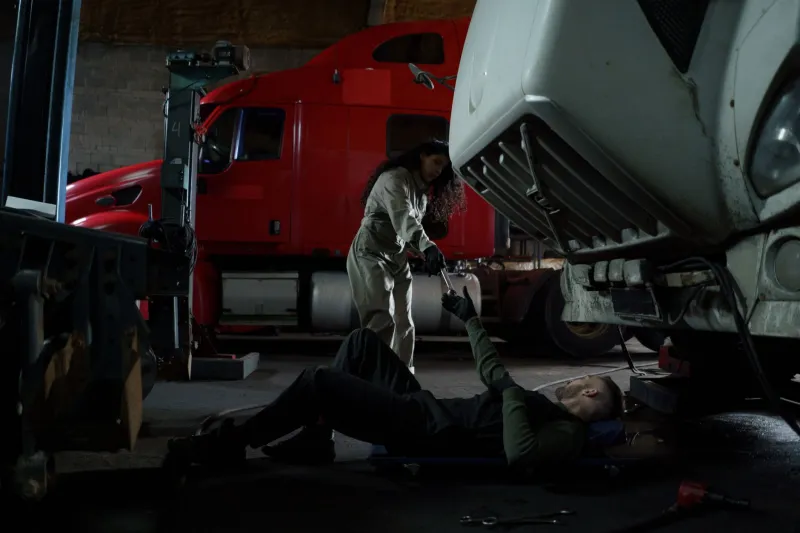
There's no syllabus. No tuition. No certificate at the end. Just a folding table covered in sketches, a couple of people arguing about wheel hubs, and the faint smell of welding flux hanging in the air like incense. If you want to learn how kinetic sculpture racing really works — not the polished version you see at the finish line, but the messy, improvisational, occasionally genius version — you need an invitation to one of these gatherings first.
Call them underground workshops, informal mentorships, or just "the network." Whatever name you use, experienced builders across the country have quietly built a parallel education system that operates entirely outside official channels. And increasingly, the racers who plug into it are the ones showing up to competition with machines that make everyone else stop and stare.
The Knowledge That Doesn't Fit in a Manual
Kinetic sculpture racing is deceptively complicated. On paper, the challenge sounds almost whimsical: build a human-powered sculpture that can cross sand, water, pavement, and mud over the course of a multi-day race. In practice, it's a brutal engineering puzzle wrapped in a creative exercise, and the solutions that actually work tend to be deeply personal — born from years of failure, improvisation, and the kind of intuition you can't download.
"There are things I know about how a hull behaves in shallow tidal water that I figured out the hard way over about six race seasons," says Marcus Delroy, a veteran builder from the Humboldt area who's been racing and mentoring for nearly two decades. "You can't write that down in a way that transfers. You have to show someone. You have to be standing next to them when it goes wrong."
That's the gap these informal networks exist to fill. Experienced builders invite promising newcomers into their shops, share prototypes mid-build, talk through failures over bad coffee, and generally do the kind of slow, patient knowledge transfer that formal institutions rarely have time for. It's apprenticeship culture, kinetic-racing style.
How the Invitations Actually Work
Getting into one of these circles isn't exactly mysterious, but it's not advertised either. Most newcomers find their way in through race weekend itself — by asking smart questions at the wrong moment, or by showing up to help tear down a sculpture after the finish and demonstrating that they actually know which end of a wrench to hold.
"I basically auditioned without knowing I was auditioning," laughs Priya Okafor, a second-year racer from the Pacific Northwest who credits her first informal workshop invitation with completely transforming her approach to drivetrain design. "I was asking this guy about his pontoon attachment system and apparently I asked it the right way, because two weeks later he texted me his address and said to bring lunch."
The vetting process, such as it is, tends to filter for attitude more than skill level. Builders who've been around long enough have developed a nose for the kind of curiosity that's worth investing in. Ego, competitiveness, and a tendency to argue before listening are reliable disqualifiers. Genuine enthusiasm and a willingness to be wrong, on the other hand, open doors.
What Actually Gets Taught
The curriculum — again, not a real curriculum — tends to cluster around the problems that eat beginners alive. Floatation engineering comes up constantly. So does the dark art of weight distribution, the counterintuitive mechanics of steering on loose sand, and the question of how to build a sculpture that looks spectacular at rest but doesn't shake itself apart under human power at speed.
But the most valuable lessons are often less technical and more philosophical. Veteran builders talk about building for repairability, not just performance — designing systems that a tired, muddy pilot can fix with the tools in their pack at mile thirty. They talk about the relationship between visual ambition and structural honesty, and how the sculptures that tend to win aren't necessarily the most complex, but the most coherent.
"The biggest thing I try to get across," says longtime racer and informal workshop host Dana Ferris, based in Baltimore, "is that the race is the test, not the finish line. If your machine only works when everything goes right, it doesn't work. You have to build for the moment when everything goes wrong."
That kind of thinking doesn't emerge from a single conversation. It accumulates over multiple sessions, multiple builds, multiple failures witnessed and discussed in real time.
The Competitive Edge — and the Ethics Around It
Here's the tension that sits at the center of all this: if some builders have access to these networks and others don't, does that create an unfair advantage? It's a question the community has been chewing on quietly for years.
Opinions split roughly along generational lines. Older builders tend to argue that the knowledge itself isn't the advantage — it's the willingness to seek it out and apply it. Plenty of people get mentored and still build mediocre machines. Plenty of self-taught newcomers show up with genuinely innovative solutions that nobody in the network would have thought of.
Younger voices are sometimes less comfortable with the informality of it all. If access depends on geography, personal connections, or simply knowing the right person to impress on race weekend, then talented builders in isolated areas or without existing ties to the community may never get the invitation. That's a real equity gap, even if nobody intended it.
Some mentors are actively trying to widen the door. A handful of builders have started hosting more open workshop days — still informal, still invitation-flavored, but with a broader definition of who counts as a promising newcomer. A few regional racing organizations have begun quietly encouraging experienced members to formalize at least some of their knowledge-sharing, even if the garage-table format stays.
Why the Secrecy, Anyway?
It's worth asking why so much of this happens in the shadows in the first place. Kinetic racing isn't exactly a high-stakes professional sport with millions of dollars riding on proprietary technology. So what's actually being protected?
The honest answer seems to be less about competitive secrecy and more about community texture. The informal nature of these workshops is part of what makes them work. The moment you put a schedule on it, charge admission, and hand out worksheets, something essential evaporates. The best learning happens in the cracks — in the half-hour conversation that starts because something broke and ends somewhere completely unexpected.
"If I ran an official class, I'd have to be the expert the whole time," Marcus Delroy says. "This way, I learn stuff too. Last month this kid I was supposedly mentoring figured out a cable routing solution I'd never considered. That doesn't happen in a classroom."
Maybe that's the real point. These networks aren't just passing knowledge down — they're generating new knowledge, one cluttered garage at a time. And if you ever find yourself with an address and instructions to bring lunch, don't be late.