One Weird Weekend That Changed Everything: How Kinetic Races Rewire a Town's DNA
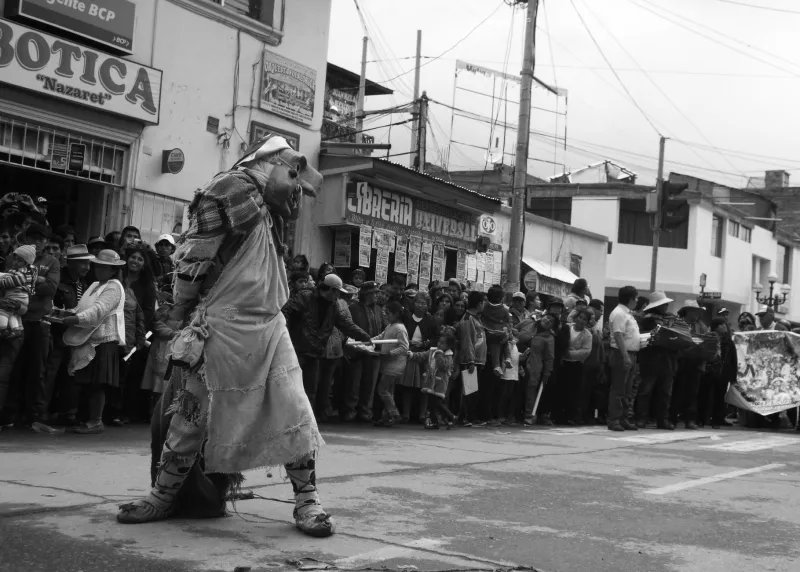
There's a moment — usually somewhere around the third hour of race day — when a first-time spectator stops thinking about the giant mutant crustacean crawling past them and starts thinking about the town itself. Why does this place do this? Who are these people? And honestly, could I live here?
That question, asked thousands of times over decades of kinetic sculpture racing, has quietly reshaped the identity of more than a few American communities. Not through grand civic initiatives or expensive rebranding campaigns, but through mud, pedal power, and the kind of collective weirdness that you just can't manufacture.
The Myth of the One-Day Event
It's easy to look at a kinetic sculpture race as a contained spectacle. Machines show up, people cheer, someone wins a trophy made of found objects, and everyone goes home. Done. But that framing misses what's actually happening beneath the surface.
The towns that host these races — places like Ferndale, California, where the Humboldt Bay kinetic tradition has deep roots, or Baltimore, where the American Visionary Art Museum's race draws thousands downtown — aren't just putting on a show. They're reinforcing a shared self-image. They're saying, loudly and in public, this is the kind of place we are.
And that message has legs. It travels home with visitors. It shows up in travel features. It gets shared in the kind of social media posts that actually make people stop scrolling. Over time, it becomes part of how the outside world understands a community — and more importantly, how the community understands itself.
What Happens When Artists Start Paying Attention
Ask any artist why they moved to a particular town and you'll usually hear some version of the same answer: it felt like a place where they could actually exist. Affordable space matters, sure. But so does cultural permission — the sense that the community around you has at least some appetite for the unconventional.
Kinetic racing communities tend to broadcast that permission pretty loudly. When your town is known as the place where someone spent eight months building a life-size rolling octopus, you're sending a signal to every sculptor, fabricator, and creative tinkerer within range. That signal attracts people.
In several towns with established race traditions, longtime residents have noticed a gradual shift in the local creative economy. Welding studios, maker spaces, and small fabrication shops start appearing. Galleries that might have struggled elsewhere find a ready audience. The race itself becomes a kind of ongoing audition — proof that the town can hold space for ambitious, strange, labor-intensive art.
Young People and the Staying Problem
One of the quieter effects of a strong kinetic racing culture is what it does to the calculus young people make about whether to leave their hometown.
This is a real problem for a lot of small and mid-sized American communities. The pull toward larger cities is strong, and it's not just about jobs. It's about identity. It's about feeling like you're part of something alive and interesting.
A kinetic race doesn't solve that problem entirely — nothing does. But it does something meaningful: it demonstrates that the people around you are capable of imagination and ambition on a genuinely impressive scale. When a teenager watches their neighbor spend a year building a machine that has to pedal across sand, float across water, and survive a bog, and then actually does it, something shifts. The town stops looking like a place things don't happen.
Several communities with long race histories report that the event has become a kind of anchor for young residents who might otherwise drift away. They come back to race. They come back to volunteer. And some of them just... come back.
Tourism That Actually Fits
There's a particular kind of tourism that small towns often chase — the kind that involves wine trails, antique shops, and a vague appeal to pastoral nostalgia. It's not a bad strategy, but it's also not a distinctive one.
Kinetic racing towns have stumbled into something rarer: a tourism identity that genuinely can't be replicated anywhere else. The race itself is a draw, obviously. But so is everything that surrounds it — the workshops, the preview events, the long months of public build progress that turn local garages into ongoing attractions.
Visitors who come for the race often end up exploring the town in ways that a standard tourist weekend wouldn't prompt. They want to see where the sculptures were built. They want to meet the builders. They want to eat at the diner where the race team has their planning meetings. It's participatory tourism, and it tends to generate the kind of word-of-mouth that no marketing budget can reliably buy.
The School Factor
This one doesn't get talked about enough. Kinetic races have a remarkable track record of sneaking STEM and arts education into communities through the back door.
When local schools get involved — and in many race towns, they do — students aren't just watching the event. They're learning to think about buoyancy, friction, gear ratios, and structural load in the context of something they actually care about. Teachers who've incorporated race preparation into their curriculum describe a particular kind of engagement that's hard to replicate with textbooks alone.
In some communities, the race has become a pipeline for technical education funding, drawing attention from sponsors and grant programs that want to support hands-on learning. The sculpture becomes a vehicle — literally — for resources that might otherwise never reach a small-town classroom.
The Identity That Sticks
Here's the thing about civic identity: it's fragile when it's imposed from the outside and surprisingly durable when it grows from the inside. A town that decides it's quirky because a branding consultant told it to be quirky will usually feel hollow. A town that has spent thirty years watching its neighbors build impossible machines and drag them through mud has earned something real.
Kinetic racing communities tend to know this, even if they don't always articulate it. The race isn't just an event on the calendar. It's evidence. It's a recurring demonstration of what the people here are actually like — creative, stubborn, collaborative, and willing to look slightly ridiculous in pursuit of something worth doing.
That evidence accumulates. It shapes how new residents see the community they're joining. It shapes how longtime residents talk about home. And it shapes how the next generation of builders decides what kind of town they want to grow up in.
One weird weekend. Repeated annually. With enough persistence and enough people willing to show up and pedal something absurd across a finish line — it turns out that's enough to change a place.