Seeds on the Wind: How Kinetic Racing Refugees Are Planting Weird Art Competitions Across America
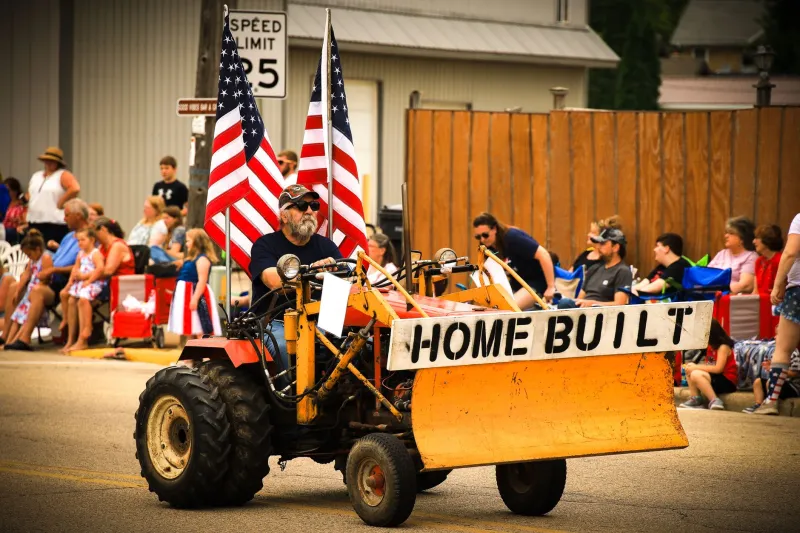
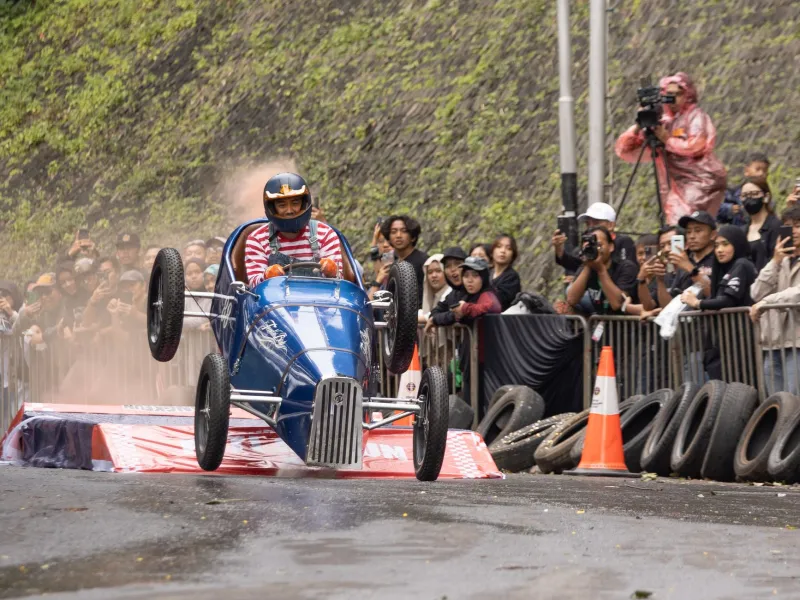
There's a particular kind of restlessness that seems to follow veteran kinetic racers wherever they go. Maybe it's the years of problem-solving under pressure — figuring out how to keep a twelve-foot aluminum pelican afloat in four feet of saltwater — that makes sitting still feel genuinely impossible. Whatever the cause, former racers are relocating all over the country, and they're not going quietly. They're bringing their welding rigs, their half-finished sketches, and their deeply strange ideas about what a vehicle should look like.
The result is something that nobody in the kinetic racing world quite planned for: a slow-motion diaspora that's spreading the culture into corners of America that never had any reason to know what a kinetic sculpture race even was.
What Gets Packed When a Racer Moves
Ask anyone who's done it and they'll tell you the same thing. The sculpture usually doesn't survive the move intact. It gets stripped for parts, donated to a local arts org, or left behind in a friend's garage with vague promises of retrieval that never quite happen. What travels, though, is everything else — the methodology, the community instincts, the reflexive habit of looking at a junkyard and seeing a drivetrain.
Lorraine Pacheco spent eight years racing in the Bay Area before a job offer pulled her to Albuquerque in 2019. Within fourteen months, she'd organized a informal showcase in a parking lot near the Rail Yards Market. Six sculptures showed up. Two of them actually moved under human power. One sank, symbolically, in a kiddie pool. "People thought we were completely unhinged," she says. "Which is basically the right reaction. That's how you know it's working."
By 2023, what started as a parking lot experiment had grown into the Corrales Crawl, a loosely structured event that draws builders from across the Rio Grande valley and pulls in curious spectators who mostly stumbled onto it by accident. No formal race organization backs it. No established kinetic racing body sanctioned it. It just exists because Lorraine moved to New Mexico and couldn't stop herself.
The Unlikely Geography of Kinetic Expansion
The traditional nerve centers of American kinetic racing — Humboldt County in Northern California, the Baltimore-Annapolis corridor, Port Townsend up in Washington — still anchor the culture. Those events carry decades of institutional memory and the kind of deeply layered local mythology that takes generations to build. Nobody's replacing them.
But the map is getting more interesting. Transplants are showing up in places like Bozeman, Montana; Chattanooga, Tennessee; Bisbee, Arizona; and Marquette, Michigan — mid-sized towns with active maker communities, enough open space to actually run something, and a creative class hungry for events that feel genuinely homegrown rather than imported from a festival catalog.
Marquette is a good example. Situated on the southern shore of Lake Superior, it's got water (essential for any proper kinetic race), a strong arts scene fed partly by Northern Michigan University, and winters that give builders roughly five months of serious garage time every year. Derek Holmstrom, a former Baltimore racer who relocated there for his partner's teaching position, has been quietly organizing what he calls "proof of concept" runs along the lakeshore since 2021.
"I'm not trying to recreate Baltimore," he's careful to say. "That event has its own soul. What I'm doing up here is figuring out what a kinetic race looks like when it's shaped by this place — the cold, the ore boats, the whole UP identity. It should feel like Marquette, not like a copy of something else."
That instinct — to let the new location shape the event rather than just transplanting a template — seems to be a common thread among the most successful kinetic diaspora projects.
Mutation as a Feature, Not a Bug
One of the more fascinating things happening as kinetic racing spreads geographically is how much the format mutates to fit local conditions and local sensibilities. The classic race structure — human-powered, multi-terrain, judged on speed and artistry and the quality of your bribe to officials — isn't always what emerges when someone starts fresh in a new place.
In Chattanooga, a former Pittsburgh racer named Marcus Webb has been developing what he describes as a "kinetic installation circuit" — a series of semi-permanent outdoor sculptures positioned around the city's Southside neighborhood that are designed to move when interacted with by passersby. It's not a race. It's not even really an event. But it grew directly from his racing background and carries the same core DNA: engineering in service of delight, accessibility, and a certain cheerful absurdism.
"Racing taught me that the machine has to work," Marcus explains. "It has to actually function under real conditions, with real people operating it, when things go wrong. That discipline is what separates kinetic art from stuff that just looks kinetic. My installations have to hold up the same way a race sculpture has to hold up on day two after it's been through sand and mud."
That's a standard most public art programs don't think to apply, and it produces a noticeably different result.
The Network Nobody Officially Runs
What's remarkable about all of this is how little central coordination it involves. There's no governing body dispatching kinetic missionaries to underserved markets. No grant program specifically funding geographic expansion. The whole thing runs on the same informal trust networks and word-of-mouth culture that characterizes kinetic racing at its established hubs.
Builders find each other through social media, through mutual friends, through showing up at established races and talking to everyone they meet. Someone mentions they're moving to Bozeman. Someone else says they know a welder there who's been wanting to do something weird. A connection gets made. A group chat starts. A year later there's a thing happening in a field somewhere.
Lorraine Pacheco has become something of an informal connector for the Southwest diaspora, fielding calls from people in Flagstaff and El Paso who want to start something and don't know where to begin. Her advice is always the same: "Find your three weirdest friends, build something that moves, and put it somewhere public. See who shows up. The community finds itself."
Why It Matters That This Is Happening Now
The decentralization of kinetic racing culture isn't just a fun trend to track. It represents something genuinely significant about how creative engineering communities sustain and regenerate themselves over time. The established races will keep happening — they're too beloved and too deeply rooted to disappear. But the culture around them was always at risk of becoming precious, of calcifying into something that only longtime insiders could fully access.
What the diaspora builders are doing, consciously or not, is keeping the thing alive in a different way. They're introducing kinetic racing logic — the problem-solving, the collaborative building, the commitment to making something that actually works and also makes people laugh — to communities that bring their own histories and aesthetics and obsessions to the mix.
The result isn't going to look exactly like Humboldt. It's not supposed to. It's going to look like Marquette and Albuquerque and Chattanooga, shaped by the people who live there and the landscapes they're working in.
And honestly? That sounds about right for a culture built on the idea that the best machine is the one you couldn't quite predict.