Salvage, Scrounge, and Sculpt: The Art of Finding Gold in Other People's Junk
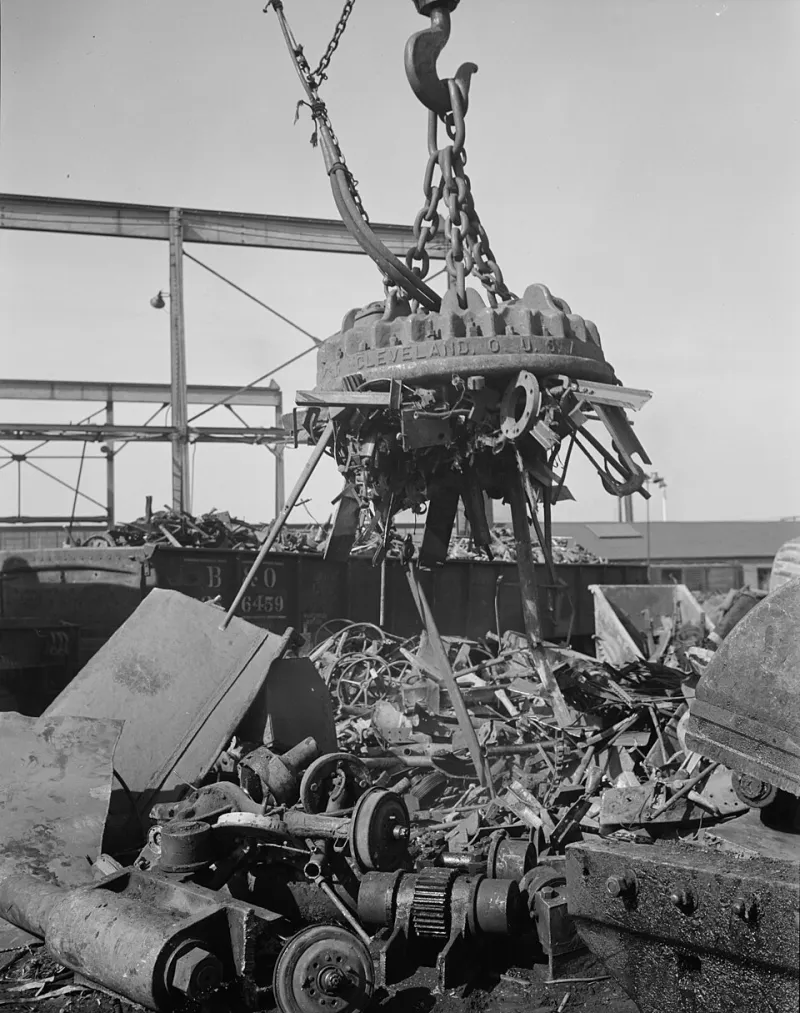
Photo: William Perlitch, Public domain, via Wikimedia Commons
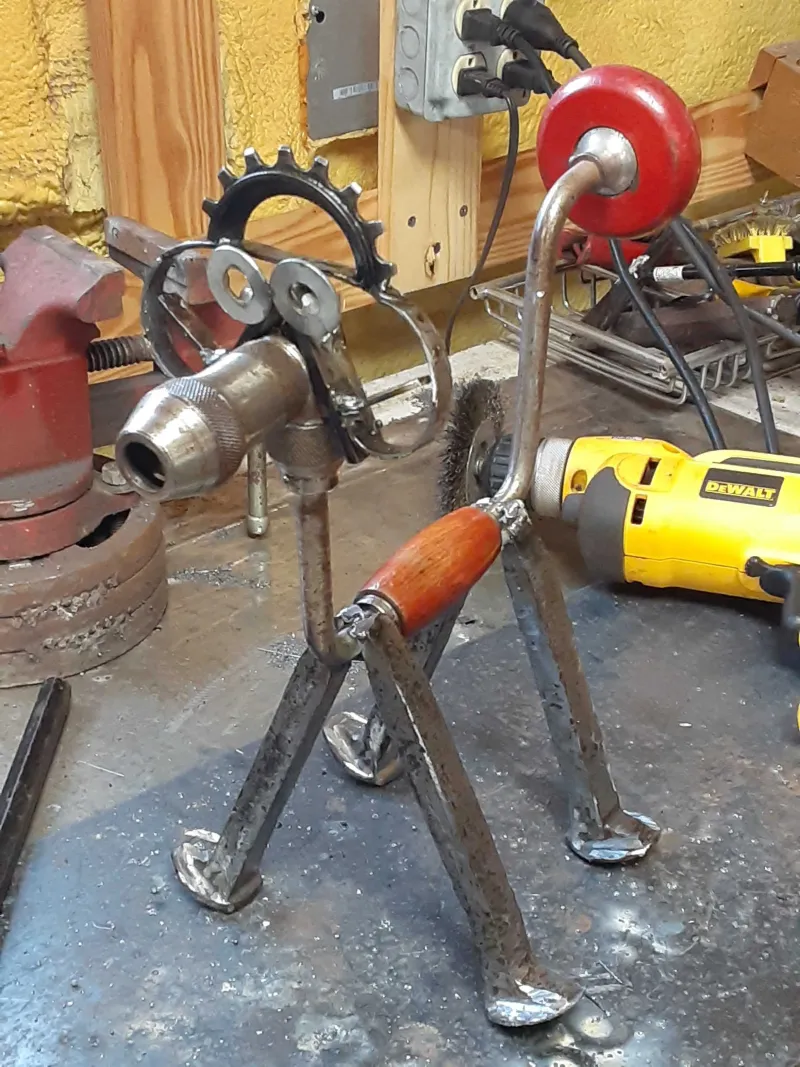
There's a moment every kinetic sculpture builder knows well. You're elbow-deep in a pile of scrap metal at a salvage yard, and something catches your eye — a gear, a sprocket, a twisted piece of aluminum that looks absolutely useless to everyone else on the planet. But in your head, it's already a leg joint on a giant mechanical octopus. That moment, builders say, is half the sport.
Kinetic sculpture racing has always been about more than just engineering. It's about vision. And nowhere is that vision tested more creatively than in the sourcing phase — the weeks or months before a single weld is made, when builders scour flea markets, online classifieds, estate sales, and industrial surplus warehouses looking for the raw ingredients of something extraordinary.
The Treasure Hunt Mentality
Ask any veteran builder where they shop, and you'll get a list that sounds less like a supply chain and more like a scavenger hunt itinerary. Habitat for Humanity ReStores. Facebook Marketplace at midnight. The "free" section of Craigslist. The curb on bulk trash pickup day.
"I drove forty minutes to pick up a broken rowing machine someone was throwing out," says one longtime racer from the Bay Area. "The frame was garbage, but the seat rollers were perfect. I used them on three different builds over the years."
That kind of lateral thinking — seeing what something could be rather than what it is — is practically a prerequisite for the kinetic racing community. The sport attracts people who are constitutionally incapable of walking past a pile of interesting junk without imagining it in motion.
And that's the key word: motion. Unlike a static sculpture, a kinetic racer has to actually work. It has to roll over pavement, push through sand, float across water, and survive a mud bog — all while looking spectacular and staying true to whatever wild creative concept the builder committed to. That means every salvaged part has to earn its place not just aesthetically, but mechanically.
Budget Builds and Big Ambitions
The economics of kinetic building are... let's call them creative. Most teams aren't flush with cash. Entry fees, safety gear, travel costs, and registration eat into budgets fast, which means the sculpture itself often has to be built for as little as possible. Resourceful sourcing isn't just an artistic choice — it's a financial survival strategy.
"We built our first machine for under $400," recalls a builder from the Pacific Northwest whose team's dragon sculpture won a crowd favorite award. "And that included the dragon head, which was basically a papier-mâché shell over a shopping cart frame we found behind a grocery store. The wheels were from a junked baby stroller and a kid's go-kart."
The trick, experienced builders say, is knowing what not to salvage. Structural components — the stuff that's going to bear weight and take stress — need to be sound. Cosmetic elements can be almost anything. Learning to triage a pile of junk by structural value versus visual potential is a skill that takes seasons to develop.
Some builders have developed deep relationships with local salvage yards and metal recyclers, who will sometimes set aside interesting finds for their regular customers. Others have built networks with industrial facilities — machine shops, HVAC companies, bicycle repair co-ops — that generate useful scrap on a regular basis.
The Online Marketplace Revolution
The internet has genuinely changed the game. eBay, Craigslist, Facebook Marketplace, and even specialized platforms like OfferUp have made it possible to source weird, specific parts from across the country without leaving your garage.
Need a set of vintage wheelchair wheels? They're out there. Looking for an old hand-cranked ice cream maker for its internal gearing? Someone in Ohio is selling one for eight bucks. Want a fiberglass boat hull to repurpose as a body shell? You can find three within a hundred miles of most major cities if you know how to search.
"I use Facebook Marketplace almost like a catalog," says one builder who's competed in races from Maryland to California. "I have search alerts set up for 'bicycle parts,' 'metal scrap,' 'exercise equipment,' and honestly, just 'weird stuff.' You'd be amazed what comes up."
The challenge with online sourcing is that you can't always assess condition before buying, and shipping heavy or awkward items gets expensive fast. Most experienced builders have a rule: if it's more than a tank of gas away, it better be truly irreplaceable.
When the Find Makes the Sculpture
Some of the most celebrated kinetic sculptures in racing history were built backward — the concept emerged from the materials, not the other way around. A builder stumbles across something so visually compelling or mechanically interesting that the sculpture essentially designs itself around the find.
One team in the Midwest famously built an entire entry around a set of enormous industrial fan blades they found at a factory liquidation sale. The blades became wings. The wings became a giant mechanical heron. The heron became a regional favorite that raced for three consecutive years.
"You can plan all you want," that team's lead builder has said in interviews, "but the best builds happen when you find something that surprises you."
That's the magic of kinetic racing's sourcing culture. It keeps the process humble and improvisational, rooted in the real world rather than some idealized design document. The junkyard doesn't care about your concept sketches. It offers what it offers, and the builder's job is to see the possibility in the pile.
The Unwritten Rules of the Scrounge
The community has developed its own informal ethics around material sourcing. Don't strip parts from working machines if you can avoid it. Ask before you take, even from "free" piles. Give credit to unusual finds when you talk about your build — the origin story is part of the sculpture's identity.
And perhaps most importantly: share the knowledge. If you find a great salvage yard, tell your fellow builders. If you've got leftover parts from a previous build, offer them up to someone just starting out. The kinetic racing world is small, collaborative, and deeply committed to keeping the barrier to entry low.
Because ultimately, the whole ethos of the sport — art that moves, built by regular people on irregular budgets — depends on the belief that the best raw material isn't money. It's imagination.
And there's plenty of that to go around.