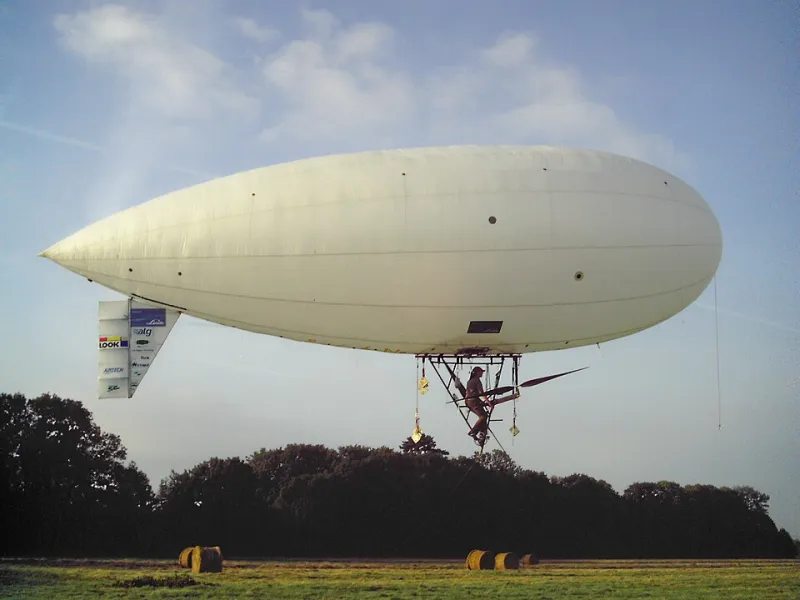
Chess on Wheels: The Tactical Playbook Veteran Kinetic Racers Don't Talk About

Photo: Tony, CC BY 2.0, via Wikimedia Commons
Anybody who's ever stood on the sidelines of a kinetic sculpture race knows the spectacle: a giant flamingo pedaling through sand, a steam-punk octopus navigating a creek crossing, a crew of six humans frantically pumping to keep a ten-foot dragon afloat. It looks like pure chaos. But spend five minutes talking to a veteran racer, and you'll start to see the chess match hiding underneath all that glorious weirdness.
The Kinetic Sculpture Race isn't just an art competition. It's a multi-terrain endurance event that demands the kind of strategic thinking you'd expect from a NASCAR pit crew or a wilderness survival team. And the teams who keep showing up on the podium? They've got a playbook—even if they're not always eager to share it.
The Water Crossing Calculation
Ask any experienced builder what keeps them up the night before race day, and nine times out of ten, the answer involves water. Whether it's Humboldt Bay in California or the Chesapeake tributaries in Maryland, water crossings are where races are won and lost. The challenge isn't just buoyancy—it's controlled buoyancy.
"You can make almost anything float," says one multi-year competitor from the Humboldt circuit. "The trick is making it float straight, float fast, and then actually get back on land without dumping your whole team."
Veteran teams spend weeks doing what amounts to bathtub physics experiments, calculating the weight distribution of their sculpture at full crew capacity. A few pounds shifted too far toward the stern can turn a graceful water crossing into a slow-motion spin-out. Many experienced builders now use basic CAD software to model their hull geometry before they ever cut a single piece of aluminum—something that would have seemed absurdly technical to the early generations of racers.
The entry and exit angles of a water section are equally critical. Teams scout these points months in advance, sometimes showing up at low tide with measuring tape and notebooks. The goal is to know, before race day, exactly how steep that muddy bank is and whether the sculpture's ground clearance will clear it without nose-diving.
Weight Distribution: The Silent Killer
Kinetic sculptures are, almost by definition, overbuilt. Artistic ambition tends to pile on the pounds—an extra layer of welded steel here, a decorative fiberglass shell there, a surprise mechanical feature that nobody could resist adding. By the time race day arrives, plenty of teams are hauling significantly more weight than they originally planned.
Weight management is where engineering discipline collides head-on with artistic vision, and it's a collision that doesn't always go smoothly. The most seasoned builders have learned to assign someone on the team the specific, sometimes unpopular job of being the "weight police" during the build phase. Their job: veto anything that adds mass without adding structural necessity.
"We had a beautiful set of decorative fins one year," recalls a builder from the Maryland race circuit. "Gorgeous. Probably added forty pounds. We cut them two days before the race and I still hear about it from the sculptor. But we finished. Teams with the fins didn't."
Beyond total weight, distribution matters enormously. Kinetic sculptures navigate wildly different surfaces—pavement, sand, gravel, mud, water—sometimes within the same hour. A sculpture balanced perfectly for road travel can become dangerously top-heavy the moment it hits soft sand. Teams that have raced before often build in adjustable ballast systems: small repositionable weights that let the crew shift the center of gravity depending on the terrain ahead.
Anticipating the Breakdown Before It Happens
Here's the dirty secret of kinetic racing: every machine breaks. The question is whether you're surprised by it or ready for it.
Experienced teams approach mechanical failure the same way an airline approaches emergency procedures—not as a remote possibility, but as a near-certainty that requires a rehearsed response. Before race day, the best crews run what they call "murder boards": systematic sessions where team members take turns trying to identify every single component that could fail and how they'd respond if it did.
Chain slippage, bearing seizures, steering cable failures, and hull leaks are the usual suspects. But veteran racers will tell you it's always something you didn't think of that actually gets you. One team famously lost a race because a decorative element—a spinning propeller mounted purely for aesthetics—vibrated loose and jammed a drive shaft. Nobody had thought to put it on the failure list because nobody considered it structural.
The standard veteran response is to carry a surprisingly extensive mobile repair kit. Think less "roadside emergency kit" and more "rolling machine shop." Zip ties, spare chain links, marine epoxy, duct tape, and a compact socket set are table stakes. Some teams carry a small angle grinder. The goal isn't to do a full repair mid-race—it's to do a good enough repair to limp to the next checkpoint, where a more serious fix can happen.
Timing and the Art of the Strategic Pause
Kinetic races aren't pure speed competitions. Many events incorporate time penalties and bonuses, and the scoring systems reward finishing with your full crew intact over raw pace. This creates a fascinating layer of tactical decision-making around when to push and when to deliberately slow down.
Some experienced teams have been known to time their water crossing attempts to coincide with slack tide—the brief window between tidal flows when current is minimal. Others deliberately pace themselves on early road sections to conserve the crew's physical energy for the sand and mud segments that come later. A team that burns out their riders in the first two miles will be crawling by the time they hit the toughest terrain.
The strategic pause—stopping to make a minor repair rather than pushing through and risking a catastrophic failure—is something first-timers almost never do and veterans almost always consider. Pride and adrenaline make it tempting to keep moving. Experience teaches you that a ten-minute stop now can save a two-hour breakdown later.
What First-Timers Get Wrong
The single most common mistake among rookie teams? Optimizing for the garage and not the course. A sculpture can look and perform brilliantly on a flat driveway and completely fall apart the moment it hits uneven terrain, soft ground, or a two-percent grade.
Veterans strongly recommend doing a full dress rehearsal on terrain that actually resembles the race course—ideally including a simulated water crossing if at all possible. It's not glamorous. It's not the kind of thing that makes for great social media content. But the teams who skip this step are the ones you see getting towed off the course by midday.
The other rookie mistake: underestimating crew fatigue. A kinetic sculpture can weigh several hundred pounds. Pedaling, pushing, and maneuvering that through sand and mud for several miles is genuinely exhausting work. Teams that don't train physically, not just mechanically, hit a wall.
The hidden playbook of kinetic racing isn't really a secret—it's just the accumulated wisdom of people who've failed spectacularly enough, enough times, to figure out what actually works. And if you ask them nicely at the finish line, most of them will tell you everything.