Scrap Heap Heroes: What Kinetic Racing's Most Spectacular Failures Actually Teach Us
Somewhere in a warehouse outside Eureka, California, there's a half-built contraption that was supposed to look like a giant seahorse. It has three working wheels, a partially welded tail assembly, and a hand-painted sign zip-tied to its frame that reads, simply, Do Not Touch — Still Thinking. That sign has been there for six years.
The team that built it — or tried to — calls it "The Seahorse That Shall Not Be Named." They won't go into details. But they will say this: they learned more from that machine than from any sculpture that actually made it to the water.
Welcome to the kinetic racing bone yard.
What the Bone Yard Actually Looks Like
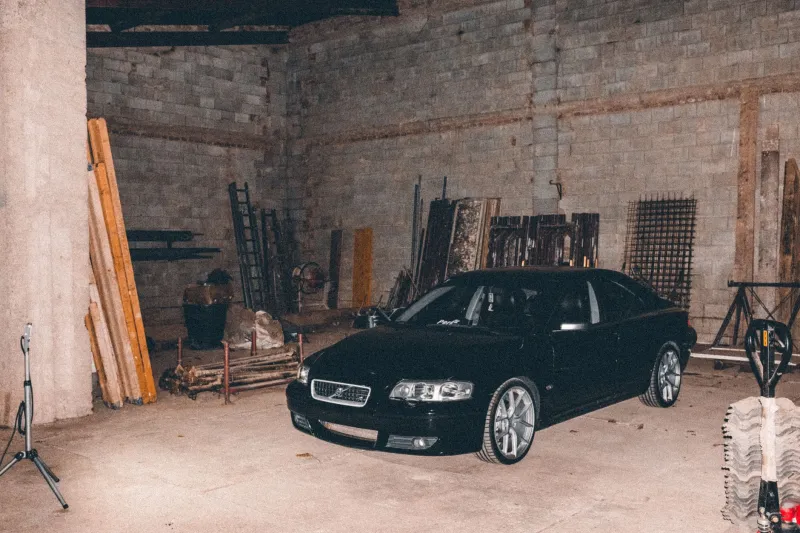
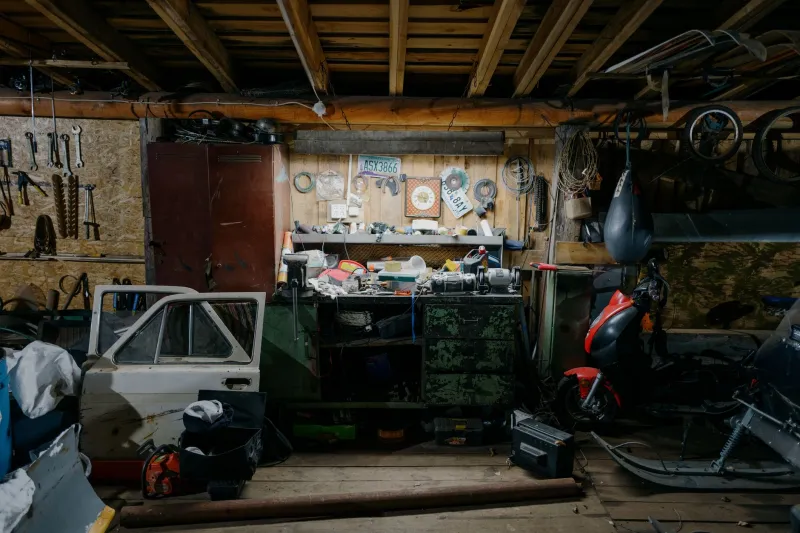
Every serious kinetic racing team has one. Sometimes it's a corner of a rented storage unit, crammed between old camping gear and holiday decorations. Sometimes it's an entire barn. More often than anyone wants to admit, it's a backyard — a slowly expanding galaxy of salvaged parts, prototype frames, and mechanisms that almost worked.
These spaces don't get photographed for social media. They don't show up in the highlight reels that make kinetic racing look like pure, jubilant chaos. But they're real, and they're everywhere, and the builders who haunt them will tell you — if you catch them in the right mood — that these are the most honest places in the whole sport.
"My garage looks like a crime scene," admits one veteran builder from the Pacific Northwest who has competed in multiple races over the past decade. "There are at least four machines in there that never saw a starting line. Some of them I still can't talk about without getting a little emotional. And I mean that in both directions."
The Anatomy of a Catastrophic Prototype
Failed kinetic sculptures tend to fail in a few recognizable ways. There's the structural collapse — the frame that looked solid on paper and turned out to have the load-bearing capacity of a wet paper bag. There's the propulsion disaster — the pedaling system that worked beautifully in the driveway and seized up completely the moment it hit actual sand. And then there's the worst category of all: the machine that worked fine mechanically but was simply impossible to steer, turning every test run into a slow-motion disaster.
One builder from the Midwest described a prototype she spent eight months constructing — a rolling interpretation of a prairie thunderstorm, complete with spinning cloud formations and a kinetic lightning bolt mechanism. "It was gorgeous," she says. "Absolutely gorgeous. It also wanted to tip over every time anyone sat in it. We tried ballast. We tried redistributing the weight. We tried just... hoping. None of it worked."
The thunderstorm now lives in her sister's garage in pieces, waiting for a rebuild that may never happen.
Failure as Curriculum
Here's the thing about the kinetic racing community: failure doesn't carry the same shame it might in other competitive spaces. There's an almost deliberate culture of transparency around things going wrong, partly because the machines are so inherently weird that nobody really expects perfection, and partly because the community is small enough that everyone has seen everyone else's disasters up close.
"We talk about our failures at every meetup," says a builder and organizer connected to the Baltimore race circuit. "Not in a self-flagellating way — more like a debrief. What went wrong, why it went wrong, what we'd do differently. It's become its own kind of tradition."
That tradition has real engineering value. Teams that document their failed prototypes — even informally, with phone photos and scrawled notes — develop what amounts to a private library of negative results. They know which wheel configurations buckle under lateral stress. They know which buoyancy solutions look clever in theory and sink embarrassingly in practice. They know, sometimes from painful personal experience, exactly how much a kinetic sculpture can flex before something important snaps.
This is, in a very real sense, the scientific method in action. You hypothesize, you build, you test, you fail spectacularly in front of your neighbors, and then you figure out why.
The Ones That Hurt the Most
Not every prototype failure is a learning experience you can laugh about later. Some of them sting in ways that linger for years.
A team from coastal Oregon spent two full racing seasons developing a machine they describe as "the most technically ambitious thing we'd ever attempted" — a full-scale rolling and floating sculpture built around a complex internal gear system that would allow the crew to modulate speed across different terrain types without stopping. The engineering was genuinely innovative. The fabrication was meticulous. And in the final pre-race test, the gear system shredded itself in under four minutes.
"We cried," one team member says, without any apparent embarrassment. "Like, actual tears. We'd put so much into it. And then we put it in the storage unit and didn't look at it for about eight months."
They've since cannibalized parts of that machine for two subsequent builds. The gear system — or what's left of it — is still in the unit. "I keep it as a reminder," the same team member says. "Not to be dramatic about it, but it keeps me honest. It reminds me that ambition without testing is just wishful thinking."
The Bone Yard as Archive
There's an argument — and some builders are starting to make it seriously — that failed prototypes deserve preservation just as much as race-winning sculptures. The machines that never made it to the starting line represent enormous amounts of creative and technical labor. They document ideas that were ahead of their time, or slightly off-target, or simply unlucky. They're a record of what the community was reaching for, not just what it achieved.
A few teams have started treating their bone yards with something approaching archival care — tagging parts with notes about why they failed, photographing assemblies before they get stripped for spares, keeping rough build journals that future teammates can reference.
"It's basically institutional memory," says one long-running team captain. "New people join, old people move away. If we don't write down why we tried something and why it didn't work, we'll just try it again in five years and fail the same way. Which, honestly, we've done. More than once."
What Lives in the Back of the Garage
The seahorse in the Eureka warehouse. The thunderstorm in pieces in Illinois. The gear system in coastal Oregon. These aren't just junk — they're the rough drafts of something genuinely creative and genuinely hard, built by people who cared enough to try and honest enough to admit when trying wasn't enough.
Kinetic racing celebrates the machines that roll, float, and fly across the finish line. But the bone yards are where the real education happens — where builders figure out the difference between an interesting idea and a working machine, and where they learn, sometimes the hard way, that those two things are not the same.
The sign on the seahorse still says Do Not Touch — Still Thinking. Maybe that's exactly right.