Built to Last? Why So Many Kinetic Racing Teams Flame Out After Year One
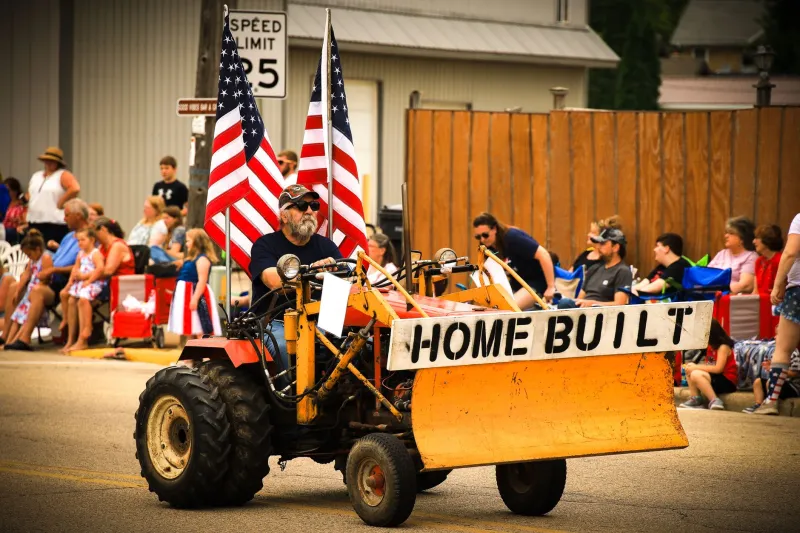
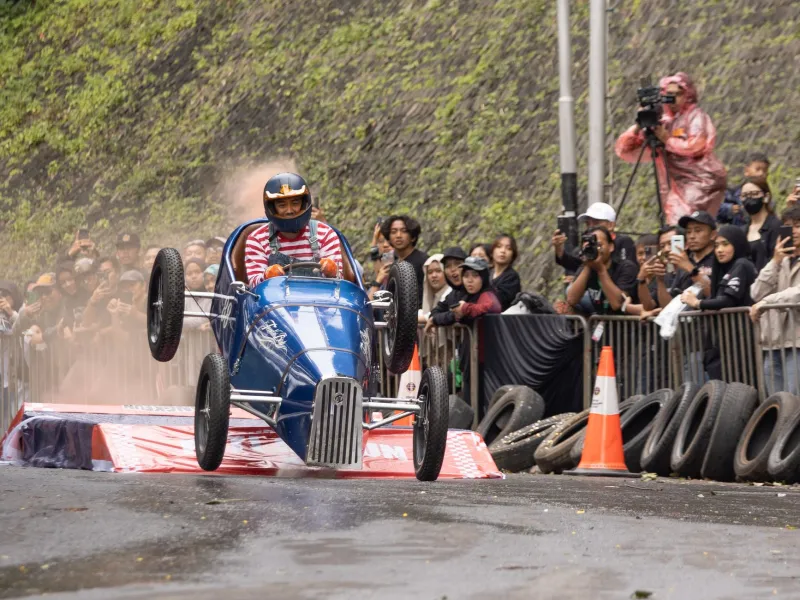
Ask any veteran race organizer about the dropout rate and they'll give you the same knowing look — the one that says yeah, we've seen this before. A shiny new team rolls up to registration with big energy and a half-finished sculpture that somehow, miraculously, makes it across the finish line. Everyone hugs. Someone cries. Photos get posted. And then, somewhere between the post-race bonfire and the following January, the whole thing quietly evaporates.
It happens more than the kinetic racing community likes to admit. Across events from the storied Humboldt Bay race in Northern California to the Baltimore American Visionary Art Museum's annual spectacle, organizers have quietly watched a revolving door of first-timers who never return. The sculpture ends up in a barn. The team group chat goes silent. The dream, it turns out, had an expiration date.
So what's actually going on?
The Honeymoon Is Real — And So Is the Hangover
Talk to anyone who's finished their first kinetic race and the language they use is almost religious. Transformative. Life-changing. I've never felt more alive. That's not hyperbole — it's the genuine neurological cocktail of sleep deprivation, creative pride, physical exhaustion, and communal absurdity doing its work.
The problem is that the second year asks you to recreate that feeling on purpose, with the memory of how hard it actually was sitting right there in the room with you.
"The first time, you don't know what you don't know," says one former team captain from the Pacific Northwest who asked not to be named. "You're running on adrenaline and ignorance. Year two, you know exactly how much it's going to cost, how many weekends it's going to eat, and how many times someone's going to bail on a build night. That math hits different."
Psychologists call this the effort awareness gap — the first attempt at something difficult is buffered by novelty, which suppresses the brain's natural resistance to sustained hard work. Year two strips that buffer away entirely.
The Money Problem Nobody Talks About Loudly
Kinetic racing has always worn its scrappy, salvage-yard aesthetic as a badge of honor. And it's true that some of the greatest sculptures in race history were built for almost nothing. But the floor for a competitive, structurally sound, actually-floats-and-climbs-sand entry has crept upward over the years.
Welding supplies, waterproofing materials, custom fabrication for drivetrain components, transportation, entry fees, costumes, safety gear — it adds up fast, especially for teams that don't have a shop, a truck, or a friend who happens to own a welder. First-year teams often absorb these costs on pure enthusiasm, splitting expenses across five or six people who are still romanticizing the whole enterprise.
By year two, the romance has cooled and the credit card statement has not.
"We spent close to $3,000 on our first sculpture," recalls a former team member from a mid-Atlantic racing event. "We thought that was a one-time investment. Then we found out half of it needed to be rebuilt from scratch because of water damage, and two people on the team had moved away. The numbers just didn't work anymore."
Race organizers are aware of this pressure point. A handful of events have experimented with tool libraries, shared workshop space, and material donation programs — but these resources are inconsistent, underfunded, and often invisible to the teams who need them most.
When the Group Chat Dies
Kinetic racing is, at its core, a team sport. And team sports live or die by their social architecture — the informal bonds, the shared jokes, the person who always brings snacks to build night and whose absence quietly signals that something has shifted.
First-year teams are often assembled from existing friend groups or colleagues who already have social glue holding them together. The race becomes a shared adventure layered on top of relationships that were already working. But that structure is fragile. People move. Couples break up. Work schedules change. The person whose garage was the de facto workshop gets a new roommate who doesn't want strangers around every weekend.
"Our team was basically held together by one guy," admits a builder from Ohio who raced once and never went back. "He had the space, he had the tools, he had the vision. When he took a job in Denver, that was it. Nobody else had the bandwidth to rebuild around a new center of gravity."
Race organizers in communities with strong returning team cultures often point to the same factor: teams that survive long-term tend to have institutional structures — a formal name, a shared bank account, maybe even a nonprofit status — rather than relying on the personal energy of a single charismatic individual.
The Ambition Trap
There's another pattern that experienced race-watchers have noticed, and it's a little more uncomfortable to name: the ambition trap.
First sculptures are often beautifully, productively naive. Teams don't know what's impossible, so they don't rule anything out, and they end up building something genuinely surprising. But finishing that sculpture plants a seed of creative ambition that the second year has to water. And suddenly, the team isn't talking about building another fun machine — they're talking about building the best thing anyone has ever seen at this race.
That ambition is kinetic racing's lifeblood. It's also its most reliable trap.
"We spent six months designing year two and never broke ground," says one builder from the Southeast. "Every idea we had felt too small compared to what we wanted it to be. We paralyzed ourselves. The race came and went and we weren't in it."
Design paralysis, scope creep, and the psychological weight of trying to top yourself are challenges that professional artists and engineers deal with all the time. First-year kinetic racers, most of whom are neither, often encounter these forces without any framework for managing them.
What Keeps Teams Alive
For all the dropout statistics, the kinetic racing world is also full of teams that have been showing up for a decade or more, same weird sculpture or entirely new one, year after year. What do they know that the one-and-dones don't?
Almost universally, long-running teams point to the same things: lower stakes, better systems, and a deliberate separation between the artistic vision and the practical logistics. The best teams have someone who manages the money, someone who manages the build schedule, and someone who manages the social dynamics — and those roles are rarely held by the same person.
They also, almost without exception, talk about the community itself as the real reason they keep coming back. Not the race. Not the sculpture. The people.
"The finish line stopped being the point a long time ago," says one veteran racer from the West Coast who has competed in more than a dozen events. "We come back because of the people we see when we get there. The sculpture is just the ticket."
For the teams that never make it back, that ticket never got cheap enough, or easy enough, or maybe just meaningful enough to buy twice. That's not a failure of the sport — it's a reminder that kinetic racing asks a lot, and not everyone has the same amount to give.
The barn doors close. The sculpture gathers dust. And somewhere, a new team is staying up until 2 a.m., absolutely certain they're going to do this every year for the rest of their lives.