Weird Machines, Real Change: What Kinetic Races Are Doing to the Towns That Host Them
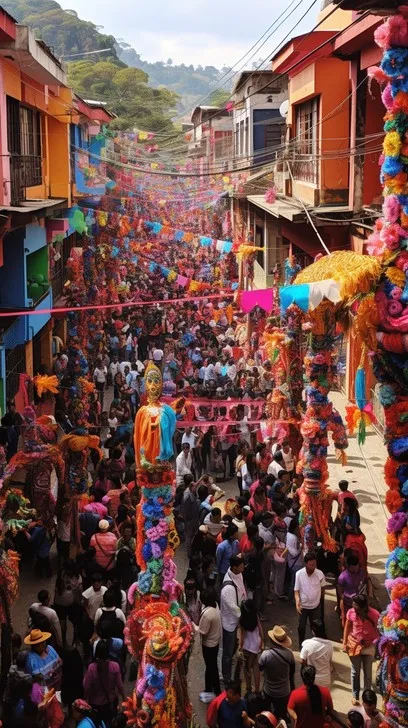
Photo: small town street festival crowd colorful parade community celebration, via images.stockcake.com
On the surface, a kinetic sculpture race looks like the world's most elaborate neighborhood block party. There are people in costumes, machines that defy description, and a general atmosphere that suggests someone spiked the community punch with pure creativity. But stick around after the last sculpture crosses the finish line, and you start to notice something: the party doesn't entirely leave.
Across the US, from the redwood coast of Northern California to the harbor neighborhoods of Baltimore, towns that have embraced kinetic racing are reporting something unexpected. The weird machines are doing real work.
The Weekend That Keeps Giving
Arcata, California is ground zero for American kinetic sculpture racing—home to the Humboldt Kinetic Grand Championship, which has been running since 1969. That's over five decades of giant rolling art, and the local economy has learned to lean into it hard.
"Race weekend is one of our biggest tourism events of the year, full stop," says one local business owner who runs a coffee shop near the race route. "We get people driving up from the Bay Area, flying in from out of state. Hotels book out months in advance."
The numbers back up the anecdote. Studies of similar arts-based community events consistently show that every dollar spent on a local arts festival generates additional economic activity through hotel stays, restaurant meals, and retail spending. Kinetic races punch above their weight in this category because they draw a specific kind of visitor: curious, engaged, and willing to spend a full weekend exploring a new place rather than just blowing through for an afternoon.
In Baltimore, where the American Visionary Art Museum has championed the city's kinetic race for years, the event has become part of a broader arts-driven identity that the city actively markets to visitors. "It's not just a race," notes one community organizer familiar with the event's history. "It's a signal to the outside world about what kind of city Baltimore wants to be."
The Kids Who Can't Stop Thinking About It
Talk to any longtime kinetic race organizer and they'll tell you the same story, in slightly different versions. A kid watches the race, goes home, and can't sleep because their brain is on fire. They want to know how the thing floated. They want to know why the wheels were that shape. They start asking questions that nobody around them can answer, and they go looking.
This is not a small thing.
In an era when educators and policymakers are constantly searching for ways to make STEM subjects feel relevant and exciting to young people, kinetic sculpture racing offers something that no classroom worksheet can replicate: proof that engineering is fun, that it can be weird, and that it can look like a giant mechanical snail pedaling across a mudflat.
Several host communities have formalized this connection. Schools near race routes have incorporated kinetic sculpture-inspired projects into their curricula. Some races offer youth division categories specifically designed to bring student teams into the competition. "We've had kids who built their first kinetic sculpture in a middle school class and came back as adult competitors ten years later," says a longtime race organizer in the Pacific Northwest. "That pipeline is real."
The arts side of the STEM-to-STEAM conversation gets a boost too. Kinetic racing is a living argument that artistic thinking and technical problem-solving aren't separate disciplines—they're the same discipline, just wearing different hats on different days. For young people who feel like they have to choose between being "a creative" and being "an engineer," watching a kinetic race can be genuinely revelatory.
Pride, Identity, and the Power of Being Known for Something Joyful
Not every kinetic race host community is a thriving tourist destination. Some are small towns that have seen better economic days, looking for ways to define themselves in a crowded landscape of regional competition for visitors and new residents.
For these communities, a kinetic race offers something that's surprisingly hard to manufacture: an authentic local identity built around joy and creativity rather than just history or geography.
Take smaller race events that have popped up in communities throughout the Midwest and Mid-Atlantic states over the past two decades. Many of them started as grassroots experiments—a handful of enthusiastic locals who thought it sounded fun—and grew into anchor events that give their towns a story to tell. "We're the place that does the art race" is a genuinely useful thing to be, especially when you're competing against larger neighbors for attention.
This identity effect compounds over time. Local artists who might have felt isolated or undervalued find community and visibility through the race. Builders who might have pursued their creative engineering hobbies in private get a reason to share their work publicly. Spectators who might have assumed their town had nothing interesting going on discover that their neighbors are, in fact, wildly creative people.
"The race made us see each other differently," reflects one community volunteer who has helped organize a regional kinetic event for several years. "You find out that the guy who runs the auto shop is also a genius sculptor. You find out the retired teacher down the street has been welding kinetic art in her backyard for fifteen years. It changes what you think your community is capable of."
The Challenges Nobody Talks About
None of this happens automatically. Kinetic races require significant volunteer infrastructure, municipal cooperation for road and waterway permits, and enough of a local builder community to actually populate the starting line. Smaller communities sometimes struggle to sustain the momentum after an exciting inaugural event.
Organizers are candid about the work involved. "The first year is the easy part because everyone's excited and curious," says one race director. "Year three is when you find out if you've actually built something sustainable."
The communities that succeed long-term tend to be the ones that invest in the builder community itself—not just the spectator experience. Workshops, shared tool libraries, youth programs, and mentorship connections between veteran builders and newcomers all help ensure there's a deep enough well of creative talent to keep the race interesting year after year.
Still Rolling
What's striking, when you zoom out and look at the full picture of kinetic racing in America, is how much these events accomplish without ever setting out to accomplish any of it. Nobody started the Humboldt race in 1969 thinking they were launching a community economic development strategy. They were just having a gloriously weird idea and seeing where it went.
Fifty-plus years later, the weird idea is still rolling—and it's taking entire communities along for the ride.